Article by Olivier Gaillard - March 2024
Accents Magazine (Department of Bouches du Rhône - 13 en Provence)
The Camargue: a salt granary
The Mediterranean is a salt granary, exploited by Greeks and Romans alike. The story of the Salins de Giraud began in the 19th century with a certain Henri Merle, who invested 4 million francs in the development of vast salt ponds.
On this rough winter's morning, snow has fallen in Presles, a small village in the Vercors. The saltsman had no idea that he was using salt from the Camargue.
The sea comes to the mountain's rescue, thanks to the magic of this small grain that has come a long way to understand how it got there. 50 million m3 of sea water.
50 million m3 of water
It was in March at the Salins de Giraud in the little port of Grau de la Dent that Patrick, team leader at the salt works, measured the density of the salt. 29g of salt per litre. That's perfect!
This was the signal for the salt workers to open the three Martellières separating the sea from the ponds. Seven intense months of slow transformation of the water into salt followed.
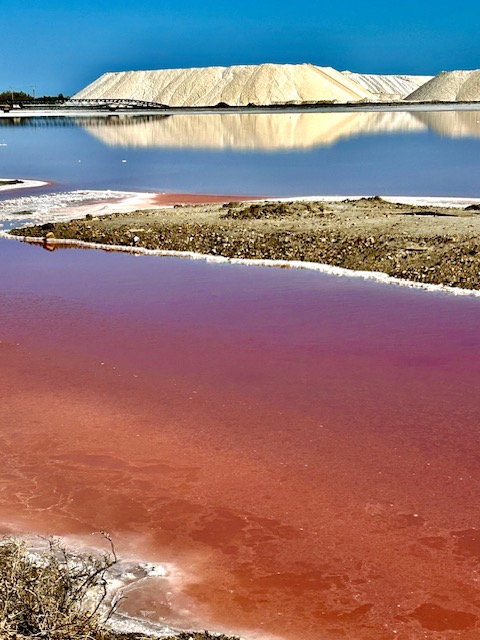
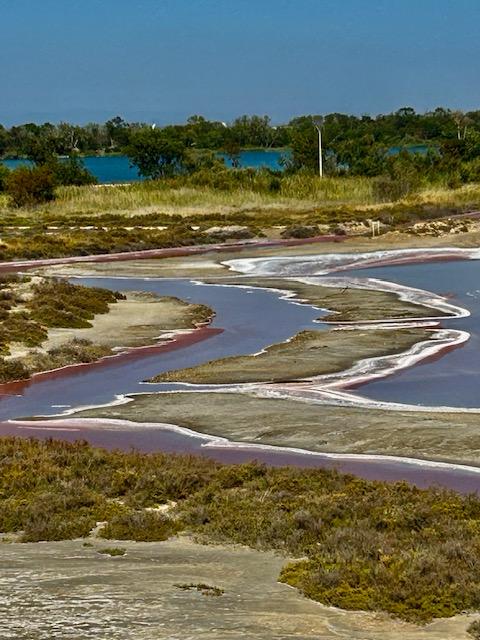
Nearly 50 million m3 of seawater will be slimmed down over 60 km and 7,000 ha. First pumped by pumps capable of delivering 7560 m³ of water/hour, the water will initially be stored in ponds.
120 km a day for a Saunier
This is when time takes its toll, starting the process of evaporating the water to concentrate the salt as much as possible. The work of the Saunier family will allow you to move from one time to another by gravity or by using a pump, opening on one side and closing on the other, the dream eye on the height of the water, the density of the salt and the weather, the wind and rain on the engines or the natural brakes. This salt gestation. A good wind will circulate the water, a bad storm will provide too much fresh water open close regulate a Saunier travels nearly 120 km a day
260 grams the perfect threshold
It is at exactly 260 g per litre that the salt is finally able to settle. It is then stored in the 345 ha divided into 25 crystallising tanks, where it finishes its journey before being harvested.
While in 1855, in the time of Henri Merle, the bottom was scraped out of the earth, today the process is more technically sophisticated. Under the layer of salt, there is always another layer of compact, very hard salt, 20 cm thick, which makes it easier to harvest. This salt, which would be fit for consumption after being cleaned, travels by barge up the Rhône and ends up on snow-covered roads.
the small white grain, a source of inspiration for the designer, Simon Porte Jacquemus
In June 2022, the designer Simon Porte Jacquemus, who grew up in Malmort, chose the lunar setting of the 20-metre-high Camelles salt mountains to present his autumn-winter collection, with models like wheels from Mad Max, under the admiring gaze of the fashion designer and former singer Victoria Beckham.
Fleur de Sel: Caviar of the Sea
Fleur de sel is so coveted because it is purity incarnate.
Collected by hand, it is the result of a very rapid process. During a cool night, the salt is suspended, forming small slabs which, blown by the wind, are found on the banks of the ponds in the morning. As it does not crystallise, it is very fine and particularly pure. This hand-picking process and its incomparable taste make it a highly sought-after product.
Why flamingos are pink
It's the shot everyone's looking for: photographing the Rose of a salt pond at sunset.
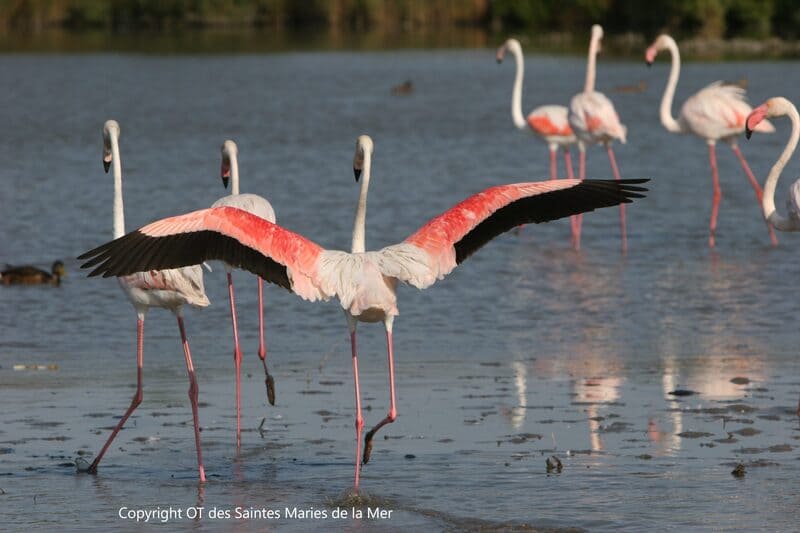
This natural process is in fact due to the presence of a micro-algae: Dunaliella Salina, which thrives in high salinity. Rich in carotenoids (a natural colouring agent), it is eaten by shrimps and artemia, which in turn are eaten by flamingos. The ingestion of these crustaceans is responsible for their pink colour. The salt marshes are a wonderful reserve for the 240 species of birds that nest there, 103 of which are protected.
Today...
The Salins de Giraud produce 450,000 tonnes of salt a year. At one time, it was the largest saltworks in Europe, producing 1 million tonnes a year. In 2007, extensive work undertaken by the Société des Salins helped to preserve an endangered activity and, above all, to maintain an ancestral trade. The only way to train a Saunier is to be apprenticed to an old hand.
This requires two years of training.
Fleur de sel is so coveted because it is purity incarnate.